

‘Too soon to let our guard down’: How Canada has avoided a surge of COVID-19 cases in hospitals
Canada has not seen the predicted surge of COVID-19 cases in hospitals that many feared would overwhelm the health-care system, but experts say relaxing physical distancing measures anytime soon could put that in jeopardy.
There is evidence that Canada is making progress in flattening the curve, but chief public health officer Dr. Theresa Tam stresses that we’re fighting “different epidemics” across the country and physical distancing measures must continue. 5:22
Canada has not seen the predicted surge of COVID-19 cases in hospitals that many feared would overwhelm the health-care system and lead to a spike in deaths, but experts say relaxing physical distancing measures anytime soon could put that in jeopardy.
There are almost 30,000 presumptive and confirmed cases in Canada, but Chief Public Health Officer Dr. Theresa Tam acknowledged “cautious optimism” Wednesday as the rate of new cases went from roughly doubling every three days to every 10 days.
“We’ve done really well. If you compare to where Italy’s been and where New York City is – we’re not there,” said Dr. Michael Gardam, an infectious disease specialist and chief of staff at Humber River Hospital in Toronto.
“And every day that goes by, it’s less and less likely we’re going to get there.”
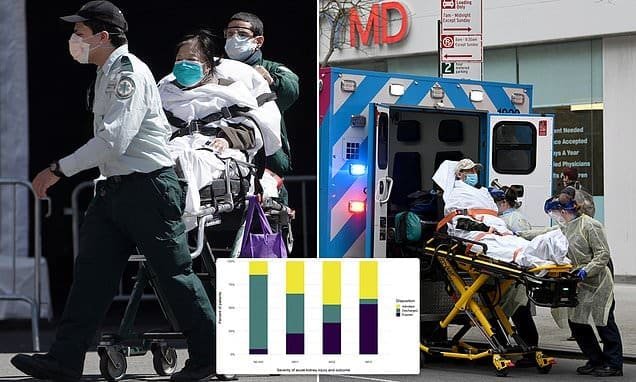
But while Canada has passed the grim milestone of 1,000 deaths from COVID-19, with Tuesday marking the deadliest day to date with 147 deaths recorded, hospitals and intensive care units have so far successfully managed the situation.
“We’ve had a slow, steady increase in hospital admissions and a very slow, steady increase in ICU admissions,” said Gardam, a veteran of SARS and H1N1 who has followed this outbreak closely.
“So all that suggests that we’ve definitely flattened the curve and we’re at a point where, presumably in the next week, we’ll see those numbers starting to go down.”
How has Canada avoided a surge?
Almost half of Canada’s COVID-19 deaths have been in nursing and retirement homes, Tam said earlier this week, meaning the situation will likely worsen as many of those patients die before making it to hospital.
“Even as the numbers of cases slows down the number of deaths, unfortunately, are expected to increase,” Tam said at a media briefing in Ottawa on Monday.
Canadian hospitals took an “all hands on deck” approach to ensuring they would be able to care for a surge in patients, said Dr. Isaac Bogoch, an infectious disease physician at Toronto General Hospital.
That included stopping elective surgeries and other procedures, increasing laboratory capacity for testing, reallocating staff to the front lines and expanding ICU beds.
Watch: COVID-19 increases strain on pharmacies
Pharmacists say they are facing increased workloads with reduced resources and limited protective equipment during the COVID-19 pandemic. 2:05
“Thankfully, to date, we haven’t really required that much of this surge capacity,” he said. “But of course, we know that it’s still too soon to let our guard down.”
Dr. Lynora Saxinger, an infectious diseases professor at the University of Alberta, said in an email that Canada may have also avoided the worst case scenarios other countries have experienced from COVID-19 largely by chance.
“I think it is likely a combination of timely public health actions and luck in not having large superspreader incidents prior to those limits, as we have seen in countries where the actions of a single patient were responsible for thousands of infections,” she said.
Saxinger referenced “Patient 31” a 61-year-old woman in South Korea who exposed over 1,000 people to the virus after attending religious services at a branch of the Shincheonji Church of Jesus in the southeastern city of Daegu.
“Certainly anything that increases the possibility of contact between infected people, who may not be all that sick, and susceptible people, which is basically everyone who has not been infected, can make this turn for the worse. At any time.”
Saxinger said physical distancing measures are “absolutely critical” to control the epidemic of the coronavirus in Canada, and that lifting those measures would have to be done in a way that is “very cautious.”
Is Canada still at risk of a surge?
Even though the curve is flattening out, Canada is still reporting more than 1,000 new COVID-19 cases per day — cases that will likely need to be treated in hospitals and ICUs and strain the health care system.
“Rather than a flood, we’re getting a steady stream, and it’s extremely important to not get complacent here and to really ensure that our physical distancing measures and the public health measures that are in place are maintained in place,” Bogoch said.
“What we really want to see is a reduction in the number of new cases per day. Then and only then can we start to relax a little bit on the hospital side and appreciate that we will have the appropriate resources to care for the patients that are coming in the front door.”

The rates of deaths and hospitalizations may also continue to rise even after daily case numbers have flattened out because of the delayed snapshot we have from the data because it can take up to 14 days before symptoms of COVID-19 can present.
“Today’s data reflects what happened a couple of weeks ago,” said Dr. Srinivas Murthy, an infectious disease specialist and clinical associate professor in pediatrics at the University of British Columbia.
“So we really have to give it time for us to really understand what the disease trajectory is in any region.”
Murthy said a surge could still happen in Canada due to the “unpredictable” way in which they arise — such as an outbreak at a long-term care facility or a large cluster of cases because of people flouting physical distancing measures.
“Surges are always likely, in fact, not just possible,” he said. “We’re just hoping that it doesn’t occur.”

Calgary emergency department physician Dr. Joe Vipond said that while the surge of cases in hospitals and ICUs could have been worse at this point in Canada, the situation is also completely “volatile.”
“It can flare up again in an instant if we relax our guard and so we have to keep all of our measures in place until we stop seeing cases and that could be a while,” he said.
“We don’t really know where we’re going. And so I think that the worst thing we can do is start to think ‘Well, I’m glad we missed that.’ Because what we really should be thinking is, ‘I’m so glad we’ve had this extra time to prepare.’
“And if it’s not as bad as we thought at the end of it all – celebrate that. But we’re too early to start celebrating now.”


About author

Recent Comments