

Health unit increases COVID-19 testing
The Porcupine Health Unit will be taking part in a “targeted Northern Ontario surveillance opportunity” which will see an increased capacity for testing being rolled out for a limited time.
“Throughout the week we will see assessment centres open in Iroquois Falls, Cochrane, Kapuskasing, Hearst and Hornepayne as well as Timmins,” said Dr. Lianne Catton, medical officer of health for the PHU. “So that is going to be a great opportunity for increased assessments.”
The idea is to provide a better understanding of the status of the virus in the North as well as the effectiveness of the public health measures being followed.
The news follows Premier Doug Ford’s request for more testing during a media conference last week.
During the Monday news conference held at 10 a.m., the Porcupine Health Unit reported no new cases of COVID-19 since Saturday. The total number of positive cases in the health unit region remained at 39.
At that time, the PHU had completed 682 tests, of which 494 were negative and 39 were positive. There were still 149 tests pending results. Of the 39 positive cases, 14 had been resolved and two resulted in death.
Catton explained Northern Ontario is at a different stage of the pandemic than other areas in the province, meaning the health unit is seeing a greater number of cases and community spread in different places and in Southern Ontario than in the North.
“What this means is that we will be encouraging testing for people with even mild symptoms and so we’re going to be encouraging primary care groups and the Porcupine Health Unit team as well to be referring individuals with mild symptoms who were previously not necessarily a part of the guidance protocols for testing.”
The majority of people who were tested previously were either close contacts of another confirmed case or had travelled internationally, or else they were priority or at-risk groups including hospital inpatients, people living in long-term care or retirement homes, health-care workers, caregivers, first responders, those living in rural and Indigenous communities and people who are so unwell they need to be admitted to hospital.
These priority groups will still be a focus during the expanded surveillance. However, the changes will allow more swabs to be administered to people who display milder symptoms of the virus.
The province sent out an updated list of symptoms last week which still include the main symptoms – cough, fever, difficulty breathing – which doctors have been looking for and will continue to look for.
Catton said there have been “a multitude of atypical symptoms” seen locally and across Ontario including sore throat, hoarse voice, difficulty swallowing, loss of smell/taste/appetite, fatigue, muscle aches, runny nose, diarrhea, nausea and vomiting.
“This expanded local surveillance is allowing an opportunity to test a broader subset of the population with mild symptoms who may be not necessarily be in a higher risk category,” Catton said. “It is just recognizing that this opportunity to expand testing in the North can give us a better picture of what’s going on and better inform the next steps going forward.”
The initial influx of COVID-19 cases was travel-related, meaning the individual had travelled internationally and picked up the virus during their trip. Then close contacts of those individuals were identified as potentially infectious once they came in contact with the individual. Closer contacts are often people living in the same household as the infected individual and have been in contact with them in a more prolonged time-frame and closer in proximity.
Following that, community spread of the virus – similar to influenza – began popping up in the health unit region, meaning people could contract the virus in the community and not from having travelled outside of Canada or being in close contact with a positive case.
Catton said the virus transmits from person to person through droplets from sneezing, coughing, spitting or mucus membranes on a person’s face, nose and mouth.
The local public health lab has increased its capacity to process more swabs as have other labs in the province, although the expanded testing capacity will impact the timing for when results come back. She mentioned public health is looking at ways to support the new initiative.
The doctor added that there is currently no specific timeline has been established for the surveillance period, although she expects it to be only a couple of weeks.
The health unit will begin to book appointments at all six assessment centres located across the PHU region – Timmins, Cochrane, Iroquois Falls, Kapuskasing, Hearst and Hornepayne – for people who display milder symptoms to determine if further assessment or potential testing is needed.
Individuals who are experiencing mild symptoms of COVID-19 are being asked to call their health care provider or the health unit to speak with someone about booking an appointment for potential testing. All the assessment centres operate on a by-appointment-only basis with no walk-ins.
Clinicians, physicians or nurse practitioners at the assessment centres see the patient and do the assessment. They determine if a nasal swab should be administered to the patient.
However, Catton warned this does not mean the health unit is screening the population or testing asymptomatic individuals. Nor does it mean people must be experiencing a certain number of the atypical symptoms listed above to qualify for testing.
“At this point in time, there’s no evidence or guidance to support that,” she said. “It is to look at a broader subset of the population with potentially milder symptoms which we recognize a lot of COVID-19 is very mild in nature. Some individuals may not even be considering themselves as being actually sick or really unwell.
“This is where we see the clinical assessment be so critical in helping reduce the spread and identify cases for COVID-19,” she added, noting some clinicians have already tested for atypical symptoms across the health unit region and caught cases.
Catton stressed it is “critically important” to recognize people may have mild symptoms, and regardless if they have been tested, of the number of tests done at the end of the day or the end of the pandemic, one of the most important things to do is stay home and self-isolate if someone is feeling ill.
“This is one of the most effective measures we can take to reduce the spread of COVID-19. If people are unwell and they’re not out associating with others, it doesn’t give the opportunity for the infection to transmit to others and spread.
“That’s why we’ve been really pushing the messages around physical distancing, staying home as much as possible, washing your hands, not touching your face. All of those things are absolutely critical because we know many people have only mild infections and may not really recognize that they’re unwell with this and be out at the grocery store or be out shopping.
“These are the types of things where when we say (there is) community transmission, that’s when we really need to push and reinforce and have everyone support and work with us as they are to ensure that we reduce the spread.”
While speaking about the state of Extendicare Timmins and Spruce Hill Lodge, Catton said the health unit continues to make sure all infection prevention measures are being taken to protect residents and staff by being in touch with both facilities daily.
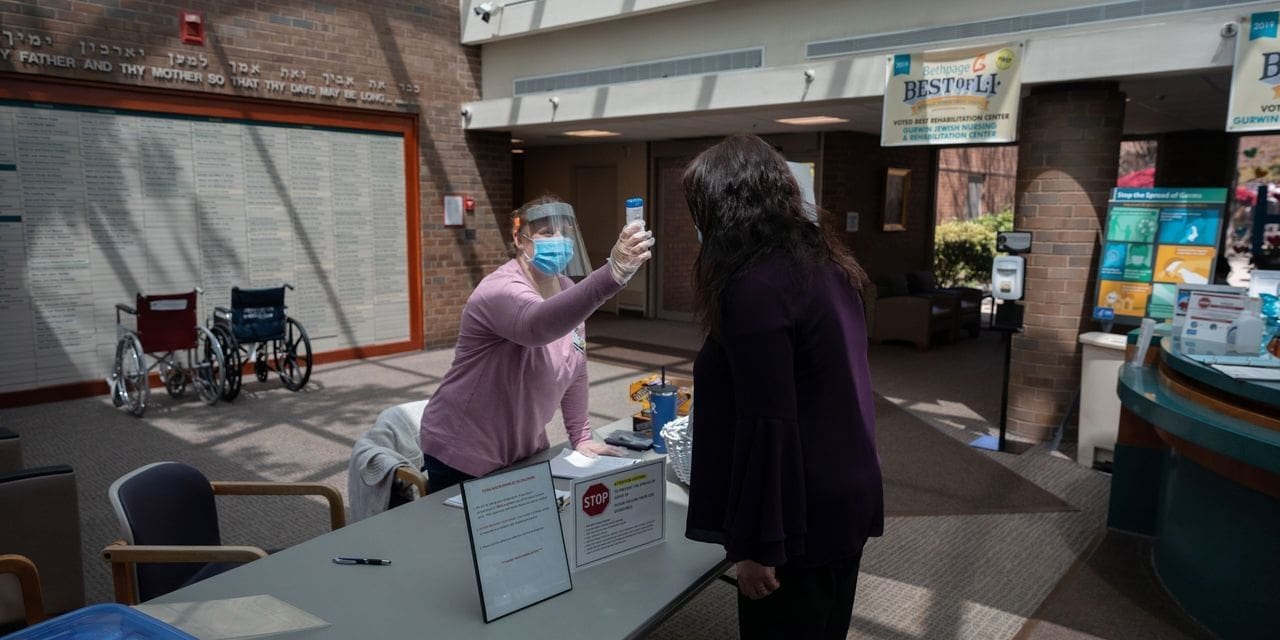
These include staff members wearing masks at all times, testing any ill staff or residents who are then put into isolation, screening and monitoring all staff and residents for mild symptoms on a daily basis, among others.
As of Monday morning, there were only two positive cases – one from each facility – which were announced over the weekend. Catton said more testing has been done since then, adding the outbreak at Extendicare has lasted 14 days and will end Tuesday. However, it will depend on the results of further testing.
She noted many tests done at long-term care homes still see influenza coming back as a prominent infection so it will be difficult to tell.
When pressed by reporters about what is being done at both facilities to limit the spread and what extra precautions staff are taking, Catton said employees are wearing personal protective equipment and the facilities are cohorting their staff to only care for certain residents to limit potential exposure.
Additionally, limited visitors are allowed onsite, meals are delivered to the rooms, residents are not allowed to congregate in common areas, there is increased sanitation/cleaning and there is a strict isolation policy for any symptomatic residents.
Even before cases popped up at those facilities, the health unit was holding meetings with all long-term care facilities, homes, congregate living settings and other health care providers regularly to share updates, guidance and recommendations from the Ontario Ministry of Health and Long-Term Care, she added.
Following the long weekend, the health unit reminded community members to work together to stop the spread of virus by encouraging them to celebrate holidays and events with only their immediate household. It also asked people to:
• Avoid travel between communities;
• Eliminate any type of in-person visits;
• Stay home as much as possible and only go out to pick up groceries, prescriptions or to go to a medical appointment;
• Avoid touching their face;
• Wash their hands often with soap and water for 20 seconds;
• Clean commonly touched surfaces;
• Cough into their arm or tissue; and
• Practise physical distancing by keeping two metres (six feet) apart from others when out of the home.
“I want to remind everyone that it is not a time to blame each other, but an incredibly important time to work together,” Catton said. “Be patient, kind and supportive. We want people to maintain physically distant, but socially close.”


About author


Recent Comments