
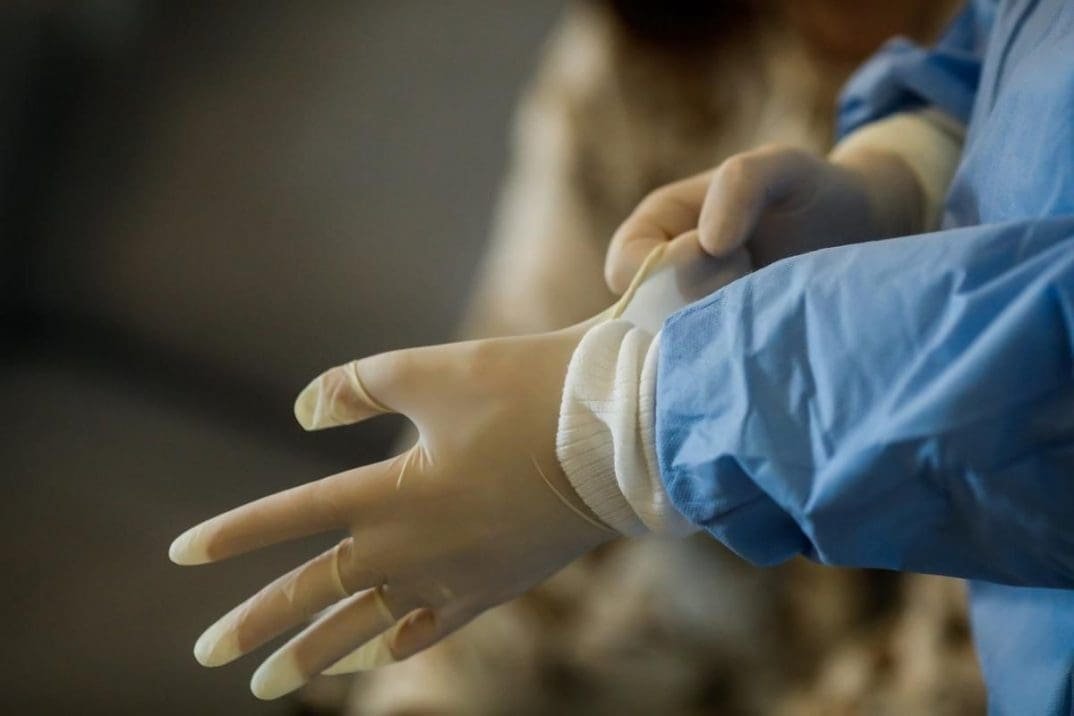
A young boy’s home-care needs highlight the dangers of spreading COVID-19
/https://www.thestar.com/content/dam/thestar/news/canada/2020/04/11/a-young-boys-home-care-needs-highlight-the-dangers-of-spreading-covid-19/home_care.jpg)
The mother of a Mississauga boy wants the provincial government to impose greater safeguards to protect her vulnerable child from contracting COVID-19 through the home care he needs to survive.
She says her fears rose when she learned that two of the four nurses who regularly care for her son were asked to work at Participation House in Markham, where 10 disabled residents were infected with the virus.
The nurses declined, but it drove home the risk of other caregivers entering her home after serving at sites with an outbreak.
“That nurse could walk into our house after a shift there and we wouldn’t know,” said the mother, who asked that she not be identified out of fear that it would impact her home care service. She also didn’t want her son’s chronic illness noted, saying it’s so unusual that her family could easily be identified.
“It’s not only my son who’s at risk,” she added in a phone interview. “If I get infected, my child will put a strain on an already strained heath-care system because he now has to go to the hospital to be cared for.”
She wants the provincial government to acknowledge the importance of home care during the COVID-19 pandemic and implement standards that guarantee a continuous and safe service.
Her concerns are echoed by home-care providers, who say the provincial government has so far neglected the vital role their sector plays in the fighting the contagion.
“More focus has to be put on home care,” said Susan VanderBent, CEO of Home Care Ontario, adding she has been pressing this message with the government.
YOU MIGHT BE INTERESTED IN…
“Proper recognition is critical,” added VanderBent, whose organization represents 70 service providers. “It’s basically to say, ‘What about home care? How will home care cope? How will we manage?’ ”
For example, “We want to make sure that when PPE supplies arrive, home care is seen as an important part of the system to support,” she said, referring to protection equipment such as face masks, gowns and gloves.
VanderBent finds the government’s lack of home care focus especially puzzling given that hospitals have been freeing up space for COVID-19 victims by accelerating the discharge of chronically ill patients to be cared for at home.
In Ontario, home care is regulated by the Local Health Integrated Networks, which determine who is eligible for the service. In 2017, 760,000 people received home care services in the province at a cost of $2.5 billion to the provincial government, according to a report by the Auditor General.
In a statement to the Star, the Ministry of Health said its officials make regular calls to home-care services providers to discuss how to continue the care safely for front-line staff and patients, a goal it described as a top government priority.
YOU MIGHT BE INTERESTED IN…
“All partners are actively engaged in implementing new home care delivery models to support home-care clients and patients,” the statement said. It includes increasing the delivery of virtual care by nurses, physiotherapist, social workers and other home caregivers. More home-care services may be brought online “in the weeks ahead.”
The government has also issued guidelines that has nurses, personal support workers and other home care providers screening themselves for symptoms of the virus every morning. But Shirlee Sharkey, president and CEO of SE Health, says the government has to consider new care models that ensure “we’re not spreading the virus from home to home.”
Currently, the home-care model sees nurses or personal support workers visit an average of six different homes a day, and could include a nursing home, Sharkey said. That should change to having the same nurse or personal service worker exclusively visit the same client.
“If a client needs three personal support worker visits a day, why not have one worker put in five or six hours a day dedicated to that one client?” Sharkey said.
Sharkey, whose 8,000 employees in Ontario make 20,000 home-care visits each day, said fear of infection is one reason her non-profit agency has seen a drop in home care services by up to 30 per cent.
“Patients and families were nervous and cancelling visits, at least short term,” said Sharkey, who is a registered nurse. “And our staff are nervous, both with the shortage of PPE and nervous with the community spread of COVID-19.”
This trend needs to be reversed, she argued, because the more people turn away from home care the more likely their illnesses will force them into already strained hospitals.
One of the problems is the lack of protection equipment. The amount of equipment that once lasted a full year is now being used up in a month, Sharkey said. It keeps her constantly competing to buy the little equipment available, which increasingly is being reserved for staff in hospitals and nursing homes.
“I don’t sleep at night worrying about it,” she said. “You can imagine the anxiety of going week to week wondering, ‘Are we going to have enough?’”
Get the latest in your inbox
Never miss the latest news from the Star, including up-to-date coronavirus coverage, with our free email newsletters
A model with one care provider working exclusively with one home-based client would significantly reduce the need for masks once it’s clear that neither the caregiver or her client is infected, Sharkey added.
That model would require a fundamental redesign of the provincial approach, which currently sees home care as a piecemeal service divided into specific tasks that get performed by the hour, Sharkey said.
“Home care has been an afterthought for years and during this pandemic we in the community are saying, ‘Listen, this has to part of the whole central planning,” said Sharkey, arguing that the government’s vision of health care has traditionally been focused on hospitals.
“Everyone is being told to stay at home,” she added. “So we want to make sure that we can provide an environment in the health care system where people can stay at home.”



About author



Recent Comments